top of page
BLOG
WRITTEN BY BETH WOOTTON
  • Writer: The Elizabethan Book Club
    The Elizabethan Book Club
  • Aug 6, 2020
  • 9 min read

Updated: Aug 30, 2020

All of these books have been great at some point since I started studying Costume & for any fashion history or art lovers. I have gone into detail about each book as a review, please scroll through to pick out some for your book lists!


I hope you all enjoy this one from my bookclub and watch out for my next fashion read: Fashion History: A Global View By Linda Walters & Abby Lillethun! Beth x

.

Photo by me.


The Story of Art By E.H Gombrich

Publisher: Phaidon


This was a bit of project reading this one I wont lie. I bought the pocket sized version to make it less intimidating to read. It was tough, and it took a few months as I wanted to refer to each image and properly study the chapters. It's a fabulous reference guide for each era and region of the story of art around the world, however when reading it front to back, you encounter this wonderful story and journey from cave drawings right up to 19th century impressionism. It is astounding as a piece of work, but also easier to read in sections, I often fold chapters down as a goal to read each week, then I found I could really study the


.


The Art Book

Contributors: Adam Butler, Clare Van Cleave, Susan Stirling

Publisher: Phaidon


I was given this book a really long time ago, I think I was about twelve. I didn't understand any art but was lucky enough to be going to Florence to some of the most beautiful galleries and seeing so many things I didn't know what was happening. I was given this, each page with one image of an artwork detailing in a small paragraph the artist and why it is key. I think it's still such a go to book when I travel, its pocket sized and I often refer to it when I want to learn something new about an artist. I was ticking off each artist if I had seen their work, and specifically the piece in the book, a great little starter to understanding artwork and what each artist has brought to the collective discussion of art in modern society.


.


isms... Understanding Art By Stephen Little

isms... Understanding Fashion By Mairi Mackenzie

Publisher: Herbert


These books published by Herbert are brilliant as introductions to the different movements in Art & Fashion. I think the format is great as each movement is documented with a key image, description and works to look up.


The books are designed to give you a quick overview and key words to help you understand, I love them for travelling with as I have taken my Isms... book to many galleries around Europe to remind myself of where each movement sits in history and to help myself place other work I see. It's been helpful to put other work into context and generally understand why art changed and movements formed.

Photo by me.


The isms... Understanding Fashion on the other hand is a very quick introduction to movements within fashion's long history. I wouldn't say it is the best way to learn key parts of costume history, although it did introduce me to smaller movements within wider history. I think it's brilliantly sectioned, telling you where collections of costume are housed for each era, and I have found places which are very niche and usually overlooked for costume history in Europe.

.


The Secret Lives of Colour By Kassia St Clair

Publisher:


The first book by Kassia St Clair and what a beauty. Having read her second book (below) first, I was so excited to fall upon this on my amazon recommended list. Detailing the individual histories of each colour on the spectrum this is a wonderful creative tool whether you're studying, drawing or generally enjoy art. I found this book exciting as I love any form of art history book, and mostly I enjoyed St Clair's second book so much I would gobble up anything she writes. However this little gem is so helpful in placing colours within fashion history, and as a costume professional, knowing when colours were available is also key information. I love flicking through and finding gorgeous colours and taking inspiration from it for my own drawing work.


.


The Golden Thread By Kassia St Clair

Publisher: John Murray Publishers


I cant say a bad word about this one, except maybe its not long enough! For anyone interested in Fashion or costume, or even just general history, this book tales the journeys of fabric and the unlikely impact it's had on our society and shaped our lives. Set out in sections of the world, from early history to modern fabric manufacture St Clair details the history of fabric. The book is so beautifully and clearly written it is easy to understand, although non-fiction it tells the story of fabric in a captivating and interesting way, you cant help but call it a 'page-turner' yet it is a work of excellent non-fiction.

This book is an excellent tool in understanding when certain fabrics came in, dye methods and production techniques, which proves stunningly useful for fashion and costume professionals. Personally this book was a revelation to me in understanding costume history, I think it should be on the curriculum from Textiles/Art GCSE (UK exams 14-16years) all the way up to creative Masters level university courses. I've recommended this book to many and my copy is soiled with the hands of many creatives, we owe St Clair a wonderful dept, in bringing this history into the contemporary discussion of fashion & costume.


This Golden Fleece By Esther Rutter

Publisher: Granta


This Golden Fleece follows a writer and researcher Esther Rutter's journey across England to trace Britains knitted history, as an avid knitter she traces the history back to the basics of wool and fabric weaving, learning different techniques and creating a new garment or accessory at each stage of her journey. This was a fun book to read, it felt like a very personal journey to Rutter but is also packed full of key information about the transcendence of traditional medieval weaving techniques into modern clothing manufacture. There are also some beautiful anecdotes and little idiosyncrasies of small areas little known but very important to Britains history, a super gem of a book.


Photo by me.

.


Alexander McQueen - Blood Beneath The Skin By Andrew Wilson

Publisher: Simon & Schuster


If you want to read any Costume/Fashion story to inspire you - this is it. I have read a few fashion designer biographies which have been interesting, but this is by far the best. Pair it with the documentary McQueen (2018) directed by Ian Bonhote and you have such an inspiring and tragic story. I think I've watched the film more than 10 times and read the book at least twice, I loved hearing his unflinching creative process.


McQueen felt no creative boundaries in the early stages of his career, which is very hard to find when you come through art schooling and universities. It reminded me of what it means to be creative, and why, though art school can be wonderfully freeing - to finally find your drive and be amongst other talented, collaborative creators - it can also be constraining, because naturally you are being graded by a system set up for a mass not an individual, which isn't conducive to the creation of Art.


We see the constrains of the fashion industry as he moves further up taking residence in Givenchy and even at his own label. Comparatively, watching Raf Simons take up creative direction at Christian Dior in 2017 in the documentary Dior and I, we see him grapple with similar struggles as McQueen - his own creative vision and the stylistic history of a french mega-brand. This book and documentary helps to show how creativity requires a question of self voyeurism, and identity goes into the creation of art.


.


The Lives of 50 Fashion Legends Visual biographies of the world's greatest designers

For contributors see bottom (its a long list, there is no one author)

Publisher: Fashionary


I received this one as a gift for my birthday this year, I think it's a wonderful reference for fashion history, the book is comparable to the isms... series, Fashionary details each designer, the influences and timeline of each, the book also has a great timeline of each designer's life at the beginning. This book proves nothing if not the collaboration and convoluting history of fashion by the key figures which drive it.


.


The Costume History By August Racinet

Publisher: Taschen


When I was at university I was discouraged from looking at Costume material that was drawn in a book by an artist, as the work is an interpretation of costume, not real evidence. The same is said of portraiture, as often court painters and other artists embellished the costumes shown and over-beautified the subject, especially royal portraiture.

However, when I started working in the industry as a costumier, visuals were so key when putting costumes together, especially when clients relied on your expertise rather than having their own research. This book was so so helpful for a clear visual of key elements of each era and culture throughout history.


On a basic level of costume for entertainment, often viewers only respond to the signifiers of a period, the silhouette of a costume, texture and colours present in this era, these help to place the costume in the period. Racinet's descriptions and clear listing of each item and style of costume is a godsend when putting costume design together and styling it, however students be weary of referencing it as it is still technically still a representation and interpretation of historical costume, so tread with caution when taking it for complete accuracy.

.


The Kyoto Costume Institute, A History From The 18th to 20th Century

Publisher: Taschen


This one is a lush book to look through and gift. I've had this book a little while and it shows excellent costume detail of the Costume Institutes' collection.


This book is brilliant for textile and pattern detail, but mostly the institute's costumes are not on display frequently and whats more do not travel usually. I saw a couple of pieces in the recent Kimono exhibition at the V&A, (see my review on the home page for review) which was a surprise, the earliest 18th century pieces are not seen except in this beautiful guide.


Photo by me.


.


Fashion on Film By

Publisher:


This book details the relationship of film costume and the affect on wider fashion culture, split into designers, often brand owners such as Dior & Robanne, however also touches on designers exclusively for costume. What a beautiful book. This one is so interesting for anyone vaguely into fashion and film. From a costume design perspective the book was so enlightening on the relationship between fashion and film, the use of labels and branding within Hollywood from mid 20th century to present.

.


Costume 1066 to Present By John Peacock

Publisher:


I have mentioned previously when discussing Racinet's Costume History book that drawings by a researcher are a bit of a grey area when studying costume and cannot be taken as fact when referencing. This being said this is a holy-grail book I have had in my collection for about ten years. This came with me and was used as a costumier and at university and now I frequently study it when looking for ideas or references. Peacock's illustrations are clear and labelled wonderfully for each decade of costume. I loved how much medieval clothing terminology I have learnt through this book, I used this as a springboard for further research and love it as a quick reference guide to shape and silhouette.


.


Ethnic Dress By Frances Kennett

Publisher: Reed International Books Ltd


This book is a brilliant reference to Folk & traditional costume around the world. The chapters are short but with excellent description and photographic references, the maps are especially helpful for those of us who's last Geography lesson was in year 9...

The only thing was that this is now out of print so wasn't cheap to purchase and took a job to find it, however good references to some of the smaller tribes and traditional dress is also hard to find.

.


Larger Books for reference


Hollywood Sketchbook: A Century of Costume Illustration By Deborah Nadoolman Landis

Publisher:


This book is very inspiring for those illustrators of costume and/or fashion. Though there isn't much information as I would like, the book is realised in beautiful form. I've found this really useful as a tool for inspiration and help with costume drawing and form, I love the classical Hollywood drawings, often done by a separate illustrator realising the designers ideas.


Landis' book has been criticised for the choices of designer and page allotment to some major designers (Adrian, Edith Head etc) versus older designers whom others consider just as influential. I tend to agree with this, as many plates are uncredited and the dialogue of illustrator and designer are often unclear. This conversely is hard to trace as it is a collaborative process and I often am annoyed when people consider designers such as Head "cheats" because they have used an illustrator... Which those who work in the industry know this is common practice and often used in technical form as a dialogue between designer & costume cutter.


I like it as this book really drove me to improve my technical drawing, and showed me the key differences between costume and fashion drawing.


Hollywood 2012 Exhibition Companion By Deborah Nadoolman Landis

Publisher:


Another brilliant book by Landis, the exhibition was only in America and when it travelled I missed it sadly, but this book is a fabulous representation of it. I think the show was great for the history of Hollywood cinema and the importance of costume, and the preservation of costumes.


NOTES:


The Lives of 50 Fashion Legends Visual biographies of the world's greatest designers

Contributors:


Christopher Lai

David Yiu

Haylee Wong

Jennifer Wong

Jessica Yang

Julie J.Y Chun

Kevin Wong

Kit Lo

Noel Lai

Ronnie Tong

Steve Wan

Vikki Yau

Yin Hui


  • Writer: The Elizabethan Book Club
    The Elizabethan Book Club
  • May 27, 2020
  • 7 min read

Updated: Aug 6, 2020

Full details of the book-swap chain happening can be found on @TheElizabethanBoookclub instagram!


I started taking part in a book swap last week, the days feel like they’re melting into one, but I’m sure it was only last week. It’s been fantastic, actually, and I feel a weird connection to the people I don’t know, sending me books. I’ve had people’s personal copies of their favourite books, with hand written notes, and also amazon copies with printed notes, just as sincere and personal. I’ve started reading one of them, The Only Story by Julian Barnes. I’ll include a small review of the book when I’ve finished it. I think the book-swap has helped me feel connected to people in some way, we post so much online, that when you return to your room, it just becomes this pixelated, box of light we look into for a connection. So it’s refreshing, actually, to reach out and have that message met with a product of this communication, a physical object from someone else you don’t know, it’s like a note, saying that you've seen each other.


Anyway, book swaps aside it got me thinking about what our book choices really say about us, is it an attractive cover and an escape. What are we searching for in the pages? Moreover, this lead me to ask some friends to write me a mini recommendation or review of a book they like. I sent everyone a slightly different request and message. Some, I asked for a significant book to them, then some for a read they read a possibly a pivotal time in their lives.


Mostly, I ask because I wanted to see what it said about them, and maybe our relationship with each other - would I find out something about them? I followed up, and asked a couple of questions, but otherwise I’ve left it unedited. This wasn’t about amazing written expression, it’s just about enjoying speaking about a world you were once immersed in or when you forgot yourself, in reading. I’m hoping this encourages these lovely people to read each-other’s words, and maybe visit these books.


Whats more, I think we all can connect through these books and understand each other a little more, without needing to explain our feelings, we are using the words of others.


Artwork by Lily Bevan

Harry Potter and the Prisoner of Azkaban BY J.K Rowling


'I have been a fan of the Harry Potter series for as long as I can remember. It’s a hard decision to choose one favourite but I think it has to be the Prisoner of Azkaban.

Not only are all of these books incredibly well written, moving, funny, thrilling, heart-wrenching, heart-warming (the list goes on), but they are also very close to me.

My late father introduced Harry Potter to me and started reading them to me when I was a little girl and we sadly never made it passed the Prisoner of Azkaban together. I didn’t actually finish reading the series until I was 18 (which I’ve always regretted because they’re so brilliant!).


I think this book stands out the most for me because of the introduction of Sirius Black, who is one of my favourite characters. He is exceptionally intrepid, compassionate, funny, his need to fight for what he thinks is right, and the deep love he has for those closest to him. This book is when the story really starts to unfold for me. We get to learn so much more about Harry’s past and his family, only egging us on to want to read more and more. JK Rowling has such a way of bringing this magical world to life, and I think that’s what hooks us all in; this world could be real. It’s not too fantastical that it could exist. I don’t know many friends my age who weren’t waiting for their letter from Hogwarts on their eleventh birthday. These books are brilliant if you’re 10 years old or 60 years young and I would always recommend them to anyone.'


'The film adaptation of this book has one of my all time favourite quotes, and words that I remind myself of frequently —

“It’s cruel that I got to spend so much time with James and Lily, and you so little. But know this; the ones who love us never really us, you can always find them in here”

Sirius Black, J.K Rowling'


Steal Like an Artist BY AUSTIN KLEON


'Although toilet book size, it taps into the mind of someone navigating their way through life and a creative career. This was such an inspiring read, and if I had it my way it would be on the curriculum at every art school.'


A History of The World in 21 Women BY Jenni Murray


'At this point in history where many of us feel less empowered by what we can achieve, I have been reading about achievements of the past. More specifically the achievements of twenty one bad ass women! A History of The World in 21 Women by Jenni Murray, explores history through the stories of extraordinary women. From Pharaoh Hatshepsut, one of the first historically-confirmed female Pharaohs back in 1478 BC; to Coco Chanel in the 20th Century freeing women of the ‘corseted-silhouette’; to 21st Century Australian Olympic sprinter, Cathy Freeman.

This book tells the story of each woman in chapters, going through time and history in chronological order. Covering a vast range of women, through a wide variety of ambitions and achievements. They were Pharaohs, business women, artists, scientists and politicians to name a few… in conclusion, the one thing I can be certain after reading this book, is that the twenty one women it uncovers are all QUEENS.'


Q: What was your favourite chapter?

A: 'The chapter on Queen Isabella of Castille, contained a fact at the end which I have remembered, as it resonated power and impact. In the 15th Century, in the game of chess, the Queen was only a weak player, only able to move one square at a time. Then, in 1495, when Isabella's reign became a success, the laws of chess were changed in her honour. The Queen is allowed to move across the board in all directions and as far as she liked. Today, the Queen is the most powerful piece on the chessboard, just as the woman who inspired the game to change.'


The untold lives of the women killed by Jack the Ripper BY Hallie Rubenhold


'This is a gripping and haunting account of a well-known period in history. Hallie Rubenhold exquisitely captures the unknown lives of the five women murdered by Jack the Ripper. This book is incredible in its focus entirely on the women's lives (and not on their murderer or the detail of their unfortunate deaths), and it respectfully honours the treacherous and tragic everyday lives of these five women. The book resonated with me on two levels: firstly tracing the women through the streets of London, which I couldn’t help but compare with the areas I know today, and secondly it’s brutally honest depiction of women in the second half of the nineteenth century. It has made me question how much has developed for women since then.'


Junk BY Melvin Burgess

'So I pick the book ‘Junk’ by Melvin Burgess, Young Adult book about drugs.

It hits me because the book is raw & believable and readable. It sucks you into their world. The book is focused on two 14 year olds who run away for different reasons, and how their lives gets tangled in heroin. Each chapter is from a new characters view point. It’s a book I think everyone should read once in their life as it will impact and live a mark on you.

Each chapter changes character narrative so you see different perspectives on their ‘truth’ of the story their life. What stuck with me is that the book is not based on a ‘true’ story but based on millions of true stories. If I was to compare it to a films feel it would be Kids by Larry Clark'


Journey to the river sea BY Eva Ibbottson


'I think I read this book for the first time when I was 7 or 8, and I was hooked immediately. The only books I reread as much as this were the Harry Potter series. Set in Brazil on the banks of the Amazon river it inspired my longing to travel South America and explore the Amazon just as Maia did (only without being forced to live with horrible distant relatives). With Maia being such a confident, no shit taking kinda gal, intuitive and ultimately kind character she provided the perfect example of how I wanted to be when I grew up. No matter how bad a situation (and as the book goes on they get progressively worse) she always tried to find the positive, and tried to find the adventure in everything she did. The book inspired me to travel and find my own adventures, and even though I haven't made it to the Amazon yet, I know this book is waiting to take me there until I can.'


Oranges are not the only fruit / why be happy when you can be normal Both BY Jeanette Winterson


'These two books are ones that have stood out for me in the past year, alone and as a combination. ‘Oranges Are Not the Only Fruit” was the first novel of Jeanette Winterson, published in 1985 and is semi-autobiographical. The frame work revolves around her childhood, where she recalls memories of growing up in a very conservative world that was tirelessly forcing her to conform into something she’s not - to extreme ends. I found it extremely compelling, shocking and though-provoking. It was easy to read - in the sense that, it flows almost like a stream of consciousness from beginning to end, jumping from memory to memory. The majority of these memories depict the over-riding relationship of the book, between Jeanette and her adoptive mother - which was extremely unconventional and a constant battle in her formative years.

Overall, it’s an extremely powerful book about over-coming adversary, inner-strength, survival and finding love in a place that is loveless. The reason why I mentioned the second book, was because this story was made all the more heartbreaking and fascinating by the retelling in her auto-biography, that came out in 2011. It overlaps, discusses that period of her life and the years following.


Q: What made you pick up her books up?

A: 'I found her writing very thought provoking, and profound at times, it really spoke to me, some bits I read and still speak about regularly. Like, in one book she spaces about how it’s not the incident itself that leads to madness - but the space in between it. I just found all the stuff she said about love so fascinating too, She was adopted and split from her mother sometime before she was a year old, maybe, and she speaks about how that caused a trauma in her. Like a wound that stayed an affected how she loved or could be loved. I really just liked her writing style, And I found her story pretty heartbreaking but triumphant. '


Thanks for reading!


Here are the authors in order of appearance -


Lily Bevan

Amy Costello

Ellie Armstrong

Emilia Khan

Alex Shore

Lois Hutchison

Katie Madin


  • Writer: The Elizabethan Book Club
    The Elizabethan Book Club
  • Apr 6, 2020
  • 5 min read

Updated: Aug 30, 2020

  • A note: Since publishing this article we have gone into lockdown, however the exhibition has been launched as a virtual tour event on the V&A website!

Images taken by myself, see my instagram for full slideshow. @theelizabethanbookclub


I was so excited to see this exhibition, not least because I love historical clothing, but the V&A has never done such a large retrospective of their oriental collection. I spent my youth as a Londoner going to the V&A on multiple school trips, so I'm spoilt in the sense I find the collections slightly tired. Also, the current pieces in the Japan section of the museum are impressive, but you don’t get to learn so much about the symbolism of the Kimono or its construction, not to mention the extensive collection in the archives that isn't shown to public all year round. This exhibition collates all the histories of the Kimono, and its affect around the world, and, how it has transcended into western fashion but also creating a mutual cultural exchange. Short answer to rating this exhibition reasonably low: the collection is impressive, the show starts very strong in the first historical section, then lacks in information and flow further on, interestingly lacking in information especially in the mid-20th century war years.


So… to break it down, the exhibition has clear sections, beginning with the origin of the Kimono and its history and symbolism. Secondary to this, is the affect of the Kimono on the wider western world and its transcendence into western fashion. Thirdly, we see the Kimono toward the 20th century, and the development of print and contemporary design using the traditional cut of the Kimono. Finally the show opens out into a wider space, showing the Kimono’s affect on the wider fashion industry in the 21st century, and further, within film/popular culture.


HISTORY— 8/10

The first section of this show details the history and composition of the Kimono, showing beautiful pieces, showing the symbolism and use of the Kimono in Japanese culture. This was gorgeous, but I did long for a bit more information. My issue was with the curation, there’s a Japanese interior element running through each space, with bamboo and pine separating the larger spaces. This, in a large exhibition with hype and massive overselling of tickets means everyone is pushed into one corner of each room to look at each piece, again, all too closely packed together. However, the pieces are stunning and anyone can appreciate the sheer craftsmanship and interesting methods of dying and embroidering in this period.


THE FASHION— 8/10

The secondary and most interesting section of the exhibition is when we get to see Japans influence on the 19th & 20th century, when the references become more subtle, it’s more about the designers choice of cut, as apposed to an obvious print or embroidery that we see in the earlier centuries. This fabulous to see dresses from collections of the 1900’s - 20’s where the cut is suddenly so clearly Japanese Kimono influenced. It really opened my eyes to how this shape and layers had collided with the western fashion. Biggest highlight were some of the 19th century garments, a fantastic blend of Japanese fabric layered onto a bustle silhouette. I took a picture as shown above, but this is a much nicer shiny one from the V&A website...


COUTURE— 5/10

Bit weak. If you’ve seen the Dior exhibition, the large curved layout of the room is recycled from this show. Okay, they put coloured stones around each section… But otherwise, pretty similar. We see [John] Galliano’s Kimono inspired Dior collection, some key pieces of Japanese couture bringing the Kimono into the 21st century and touching on its relevance within the Japanese clothing market. Theres some impressive pieces, its couture, but it didn’t excite me. I found it sad, actually that Japanese design was shown in quite a flat, obvious way. Yes, there were some unique pieces, but I didn’t get a sense of how the Kimono has developed and the designers that have explored its asymmetry and cut. I would argue that the wider discussion of “Neo-Japonism”, isn’t explored enough, we see some key pieces, but the information here doesn’t explain Japanese designers own exploration into what the Kimono is. I did love the inclusion of Hiroko Takahashi’s work, and the trends and fashion movements in Japan, but again, I felt like too much of this room was given to things we’ve seen before that don’t teach us enough about this subject. We see a lot of Galliano, and not enough information or Japanese designers within the Japan.

For one, Yhoji Yamamoto, especially the 1980’s collections, uses the Kimono to explore suiting and western formalwear. I would look at the work of Yamamoto, Issey Miyake to name two, for further research as it’s so interesting to see how the Kimono, and Japanese culture has influenced their work.


THE COSTUME— 4/10

BIGGEST downfall of this show was the lack of costume. There was some pieces from Memoirs of a Geisha, a couple of pieces from Star Wars, again I would argue there was so much more to be said about Japanese cinema and its aesthetic influence on western film making. There was a projector showing a montage of some films that featured Kimonos, again if you do your research, this little soundbite will speak for itself. But otherwise, I don’t think it’s strong. The Kimono in popular culture showed Freddie Mercury’s Kimono, Madonna’s show costume and Bjork’s infamous album cover Kimono. The Evening Standard’s review includes a statement about the Kimono’s symbolism to Mercury “who was drawn to the garment for its ability to challenge ideas surrounding gender and sexuality norms”, (ES online, Dacre 2020) This was included with David Bowie’s photograph wearing Kimono costume pieces, no physical artefact however. I just found this part slightly empty, like they’re pointing out pop culture and leaving it in a corner. There wasn’t a key discussion of Japan opening up to Rock & Punk culture in the 1970’s, and again, the mirrored affect on musicians when they visited Japan.

FINAL THOUGHT & FURTHER READING


All in all? Well worth a look! So many objects, such a great early collection and archive costume, however I do think it misses the mark in its fluidity, and what’s a completely fascinating insight into how this piece of Japanese costume has infiltrated our clothing even today.


—— Check out some further reading as this is such an extensive discussion which I appreciate one exhibition can’t do. Theres an incredible documentary on the V&A's archives which does include elements from their recent exhibitions!


Articles & Shows to check out:


Key text:

The Kyoto Costume Institute By Tascen.


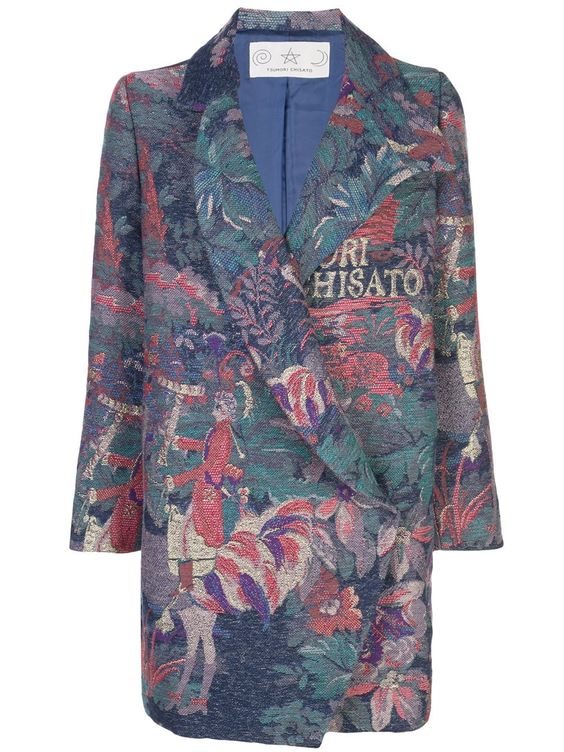
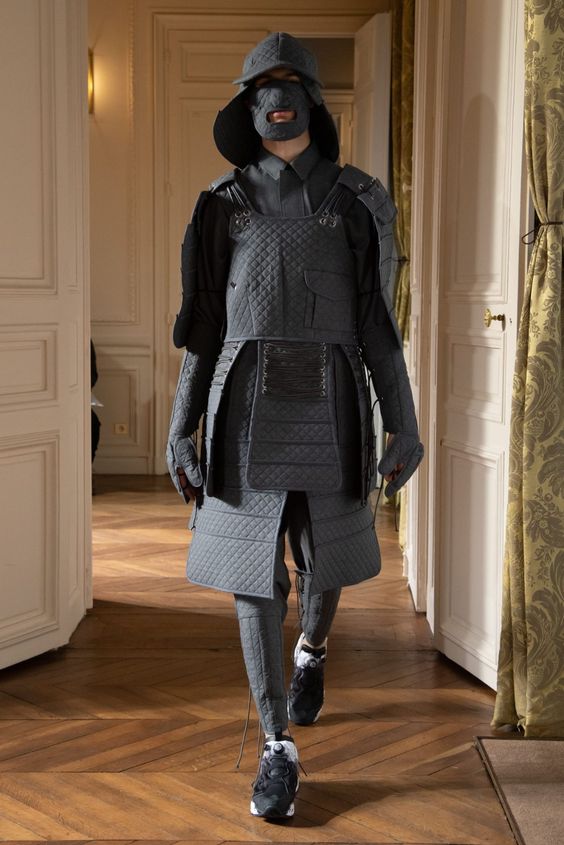
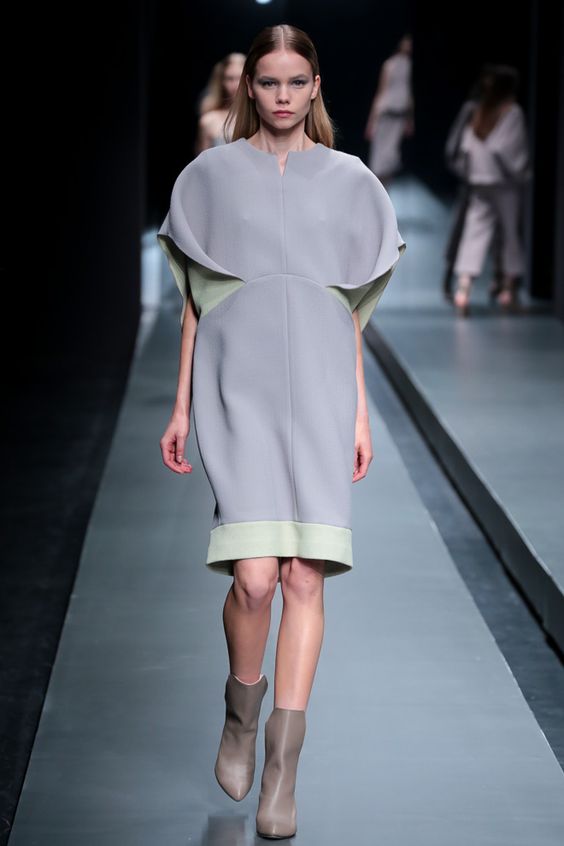
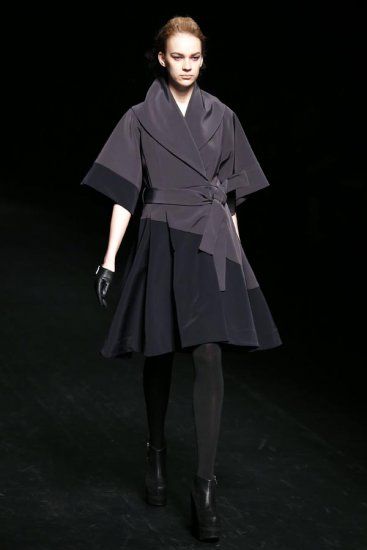
Designers to check out!

I've included some key contemporary Japanese Couture which I think is relevant - check them out!


In order -

Embroidered Coat:

Tsumori Chisato


Samurai'esque Grey suit Yoshio Kubo 2020 collection


Grey/Lime dress & Mauve Coat Hanae Mori by Yu Amatsu

 
DESIGNED USING WIX BY BETH WOOTTON
  • Facebook
  • Pinterest
  • Instagram
bottom of page