My weekly round-up of what I've watched and finished reading, hope you enjoy! x
The Party by Elizabeth Day 2017
Elizabeth Day's book The Party follows the twists and turns of one night where old friends get together, years of secrets surround them. The book trails Martin Gilmour, slight outcast and his friendship with the glamorous popular rich boy Ben. From their childhood through to university the mens lives interweave through sudden turns of events. I loved the format of the book, different chapters under different authors and winding through different decades making you question the turn of events and the validity of the characters accounts. I gobbled this book up in a couple of evenings it was so gripping! The story was so multi-facetted discussing wealth, privilege and obsession. Not what I was expecting from the beginning I couldn't work it out at all, such a fun but emotional read.
.
Ladies in Black Director Bruce Beresford 2018
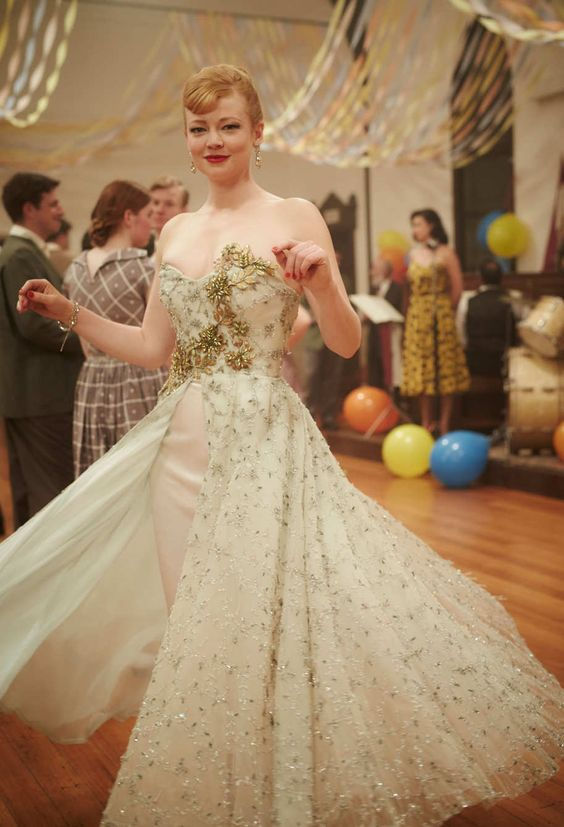
Based on the 2008 book by Madeline St John set in 1959 at a prestigious department store named Goodes in Sydney Australia. The story centres around a young girl in between high school and university, who joins as a shop hand in the ladies department to earn money over summer leading to Christmas. The story follows her and the three key women she encounters, two young women in their mid/late twenties navigating marriage (Patty) and love (Fay) whilst the third is the head of the haute couture section of the department, and older sophisticated Slovenian Madga (Julia Osmond). It’s quite a soft-hearted film, with some light comedy.
The look of the film generally is a real reason to watch it, you get beautiful scenes of Sydney & general Australia landscape but also the costumes really stand out even through the natural glamour backdrop of the shop floor setting. I think they followed each characters arc really well, Lisa generally growing up and seeking acceptance into the adult world Magda now exposes her too, but without complete fashion film fantasy as often happens in commercial period drama.
It reminds me of the film The Dressmaker (2015) with Kate Winslet by written and directed by Jocelyn Moorhouse, this tale shows a small town go through a fashionable transformation when a dressmaker returns from Paris after years away. Both stories are lighthearted but with small plot gems weaving it all together. However sometimes these films drag in the middle simply because there isn’t enough plot and both reveal secrets which on reflection don’t stand up as greatly shocking or dramatic. Never the less very worth watching for the clothes and photography as both were really inspiring to watch. The Dressmaker is probably better though if you’re interested in Australia in this era, though inaccurate in places it’d an exciting fashion fantasy to watch.
7 Days Out: Eleven Madison Park Director Michael John Warren 2018
7 Days Out follows the final seven days before any major world event in 2018, sadly only one series but so interesting. Some events include NASA’s incredible Cassini mission to Saturn ending after decades of work and research, to the Chanel couture show with final camera interviews of the legendary fashion mogul Karl Lagerfeld before his death later in the year.
My favourite episode is Eleven Madison Park, following the refurbishment and final week before the grand opening of the restaurant. Having won title of best restaurant in the world in 2017 restaurant partners Chef Daniel Humm and restauranteur Will Guidara decide to purchase the restaurant and re do it and the menu to make it more their own vision. The documentary is only 45 minutes per episode but I think watching they way chefs operate within the kitchen and front of house, we see the completely intense work ethnic and hierarchy.
Head chef Daniel Humm begins his early career as a professional cyclist before moving to American from his native Switzerland. At 24 he received his first Michelin start in San Francisco before moving to New York City and working for Eleven. The pair now own the company Make it Nice which now sees three further restaurants and a cook book across the world, most recently in Claridges Hotel London.
The series is more than the tense final moments of rush and will they finish in time, it showed me the drive that both men and the team have and their strive to be the best and except no less. Small moments like Will Guidara explaining that the plates have the logo placed exactly facing the customer printed on the base of the plate. He says “will anyone notice this? No, but it’s about doing everything with intention”. I’ve watched this episode so many times purely as I find them so inspiring, the idea that the team means more than any individual.
Moments when they discuss being in the “human connection business” not the food business, it could not be put more accurately. They see their role as a small element to help celebrate key moments in a persons life. I think the series shows the drive in life you need to make those human connections and why having that drive ultimately gives you and others around you so much joy and peace.
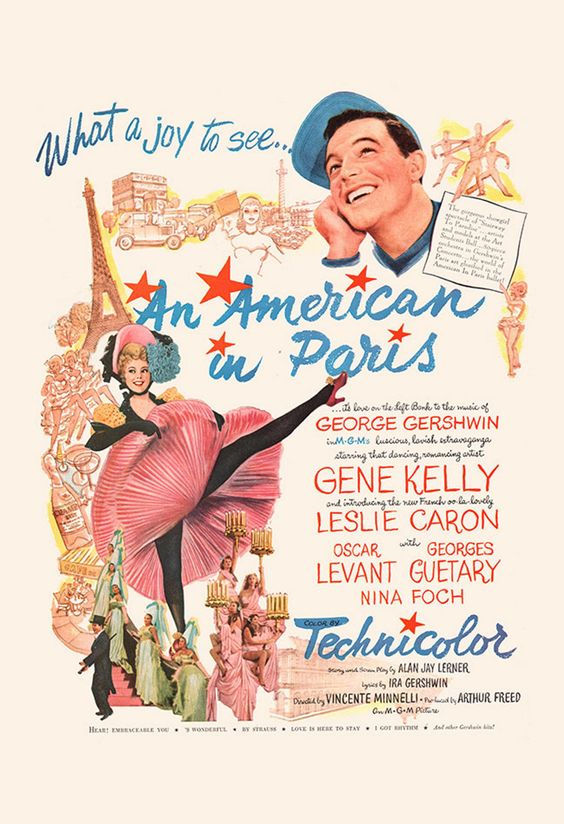
An American in Paris Director Vincente Minnelli 1951
Written but Alan Jay Lerner, key writer of Camelot, Gigi My Fair Lady and Royal Wedding. Died young at 67 but has over 231 soundtrack credits. Mostly posthumously, which shows how many films and television shows have been influenced by Camelot and My Fair Lady, but also his early music and lyrics from these films.
The bombastic erratic musical stylings of this film were revolutionary in breaking the mould of traditional musicals on film. With cinema scope coming in and expensive technicolour grading we see one of the largest, richest longest sequences in cinema thus far.
A dreamscape alongside the narrative of the artist Kelly, gives you a love triangle but mostly the romance and dialogue is transferred through dance. The costumes are fabulous, some dramatic party scenes are insane but creatively so rich, it’s worth watching for the inspiration of the mise en scene and the photography.
Elements of costume show clear influence on wider modern culture, scenes of dance where the ensemble wear striped classic new look a line skirted dresses, has translated into the Dior collections of 2017 RAF Simons crimped tulle and satin rainbow skirts. It really shows film influence on wider fashion culture today.
Some elements of the music are so poetic and balletic, the principal actress being a dancer first and discovered by Gene Kelly for this role, she shines as a dancer, her body communicates more than her acting parts. Some amazing scenes describing characters showing off the technicolour and set design, it’s so worth watching.
The Hustler (1961) Director Robert Rossen / based on the Walter Tevis Novel 1959
From the writer of The Man Who Fell to Earth (1976, Major film starring David Bowie) Walter Tevis wrote The Hustler & the sequel Colour of Money (1986) which are also films. The Hustler staring Paul Newman follows a pool player known as "fast Eddie" and his assistant travelling around America's pool rooms hustling amateur players. They hit a bump when he ups the stakes attempting to beat the best pool player in the country "Minnesota Fats", throwing his ambition and talent into question. Eddie encounters the personal cost of winning and getting involved with "fats" manager to break into the big leagues.
I had watched the sequel Colour of Money (1986) where Newman reprises his role and Tom Cruise becoming his protege, before this one, and I really liked watching it this way around. It was almost more mysterious not knowing the past Newman had as "fast Eddie". Both stories discuss relationships, ambition and what it really means to be the best - and at what cost?
They Drive By Night (1940) Director Raoul Walsh
The film follows truck-driving brothers who join a transport company, which soon after leads to one (Raft) being falsely accused of murder.
So Ann Sheridan looks like the love child of Judy Garland and Joan Crawford. Thats the first impression I wrote down about this film, secondly, is that you can't understand why Walsh has George Raft as the central male lead instead of Humphrey Bogart who plays his brother. Interestingly, only a year later after this John Huston took Bogart on as the lead in The Maltese Falcon (1941) which lead to a lifelong partnership of film-making and catapulted Bogart into a Hollywood megastar.
I found this lesser acknowledged film noir an interesting take on the mad woman striving for economic independence and sexual power. Lupino then actress turned director portrays Lana Carlsen, wife to truck company owner, gives an incredible portrayal of a woman on the edge. For 1940 these central female characters usually are one or the other Mad or Passive it appears, but I enjoyed the subtle challenges the film poses, Sheridan plays Raft's central love interest and often between Lupino dominate screen time.
The film has interesting twists and turns with beautiful visuals in Ida Lupino's character adding glamorous costumes, designed by Miles Anderson. This crime-of-passion noir is well worth watching even just for Lupino's costumes.
A Brief History of: The Normans The Conquests that changed the face of Europe By Francois Neveux