- The Elizabethan Book Club

- Apr 6, 2020
- 5 min read
Updated: Aug 30, 2020
A note: Since publishing this article we have gone into lockdown, however the exhibition has been launched as a virtual tour event on the V&A website!


Images taken by myself, see my instagram for full slideshow. @theelizabethanbookclub
I was so excited to see this exhibition, not least because I love historical clothing, but the V&A has never done such a large retrospective of their oriental collection. I spent my youth as a Londoner going to the V&A on multiple school trips, so I'm spoilt in the sense I find the collections slightly tired. Also, the current pieces in the Japan section of the museum are impressive, but you don’t get to learn so much about the symbolism of the Kimono or its construction, not to mention the extensive collection in the archives that isn't shown to public all year round. This exhibition collates all the histories of the Kimono, and its affect around the world, and, how it has transcended into western fashion but also creating a mutual cultural exchange. Short answer to rating this exhibition reasonably low: the collection is impressive, the show starts very strong in the first historical section, then lacks in information and flow further on, interestingly lacking in information especially in the mid-20th century war years.
So… to break it down, the exhibition has clear sections, beginning with the origin of the Kimono and its history and symbolism. Secondary to this, is the affect of the Kimono on the wider western world and its transcendence into western fashion. Thirdly, we see the Kimono toward the 20th century, and the development of print and contemporary design using the traditional cut of the Kimono. Finally the show opens out into a wider space, showing the Kimono’s affect on the wider fashion industry in the 21st century, and further, within film/popular culture.
HISTORY— 8/10
The first section of this show details the history and composition of the Kimono, showing beautiful pieces, showing the symbolism and use of the Kimono in Japanese culture. This was gorgeous, but I did long for a bit more information. My issue was with the curation, there’s a Japanese interior element running through each space, with bamboo and pine separating the larger spaces. This, in a large exhibition with hype and massive overselling of tickets means everyone is pushed into one corner of each room to look at each piece, again, all too closely packed together. However, the pieces are stunning and anyone can appreciate the sheer craftsmanship and interesting methods of dying and embroidering in this period.

THE FASHION— 8/10
The secondary and most interesting section of the exhibition is when we get to see Japans influence on the 19th & 20th century, when the references become more subtle, it’s more about the designers choice of cut, as apposed to an obvious print or embroidery that we see in the earlier centuries. This fabulous to see dresses from collections of the 1900’s - 20’s where the cut is suddenly so clearly Japanese Kimono influenced. It really opened my eyes to how this shape and layers had collided with the western fashion. Biggest highlight were some of the 19th century garments, a fantastic blend of Japanese fabric layered onto a bustle silhouette. I took a picture as shown above, but this is a much nicer shiny one from the V&A website...
COUTURE— 5/10
Bit weak. If you’ve seen the Dior exhibition, the large curved layout of the room is recycled from this show. Okay, they put coloured stones around each section… But otherwise, pretty similar. We see [John] Galliano’s Kimono inspired Dior collection, some key pieces of Japanese couture bringing the Kimono into the 21st century and touching on its relevance within the Japanese clothing market. Theres some impressive pieces, its couture, but it didn’t excite me. I found it sad, actually that Japanese design was shown in quite a flat, obvious way. Yes, there were some unique pieces, but I didn’t get a sense of how the Kimono has developed and the designers that have explored its asymmetry and cut. I would argue that the wider discussion of “Neo-Japonism”, isn’t explored enough, we see some key pieces, but the information here doesn’t explain Japanese designers own exploration into what the Kimono is. I did love the inclusion of Hiroko Takahashi’s work, and the trends and fashion movements in Japan, but again, I felt like too much of this room was given to things we’ve seen before that don’t teach us enough about this subject. We see a lot of Galliano, and not enough information or Japanese designers within the Japan.
For one, Yhoji Yamamoto, especially the 1980’s collections, uses the Kimono to explore suiting and western formalwear. I would look at the work of Yamamoto, Issey Miyake to name two, for further research as it’s so interesting to see how the Kimono, and Japanese culture has influenced their work.
THE COSTUME— 4/10
BIGGEST downfall of this show was the lack of costume. There was some pieces from Memoirs of a Geisha, a couple of pieces from Star Wars, again I would argue there was so much more to be said about Japanese cinema and its aesthetic influence on western film making. There was a projector showing a montage of some films that featured Kimonos, again if you do your research, this little soundbite will speak for itself. But otherwise, I don’t think it’s strong. The Kimono in popular culture showed Freddie Mercury’s Kimono, Madonna’s show costume and Bjork’s infamous album cover Kimono. The Evening Standard’s review includes a statement about the Kimono’s symbolism to Mercury “who was drawn to the garment for its ability to challenge ideas surrounding gender and sexuality norms”, (ES online, Dacre 2020) This was included with David Bowie’s photograph wearing Kimono costume pieces, no physical artefact however. I just found this part slightly empty, like they’re pointing out pop culture and leaving it in a corner. There wasn’t a key discussion of Japan opening up to Rock & Punk culture in the 1970’s, and again, the mirrored affect on musicians when they visited Japan.
FINAL THOUGHT & FURTHER READING
All in all? Well worth a look! So many objects, such a great early collection and archive costume, however I do think it misses the mark in its fluidity, and what’s a completely fascinating insight into how this piece of Japanese costume has infiltrated our clothing even today.
—— Check out some further reading as this is such an extensive discussion which I appreciate one exhibition can’t do. Theres an incredible documentary on the V&A's archives which does include elements from their recent exhibitions!
Articles & Shows to check out:
Key text:
The Kyoto Costume Institute By Tascen.
Designers to check out!
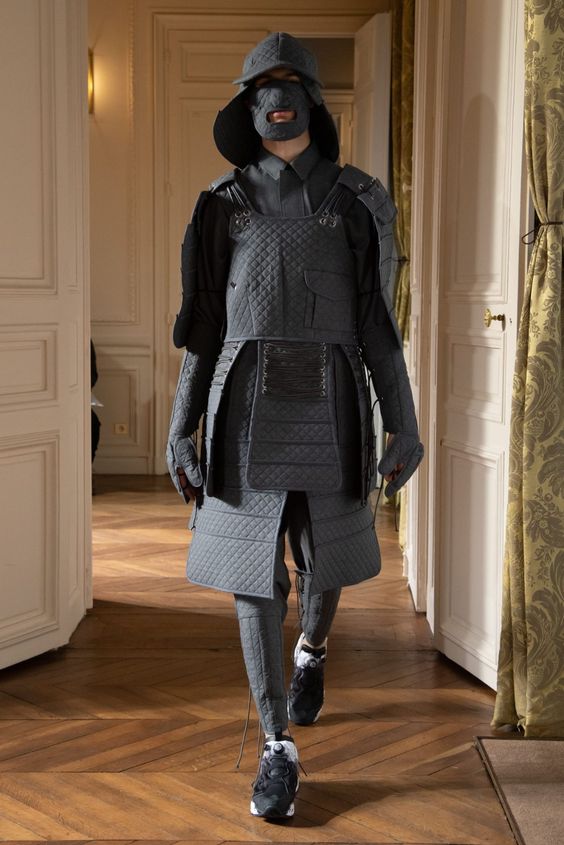
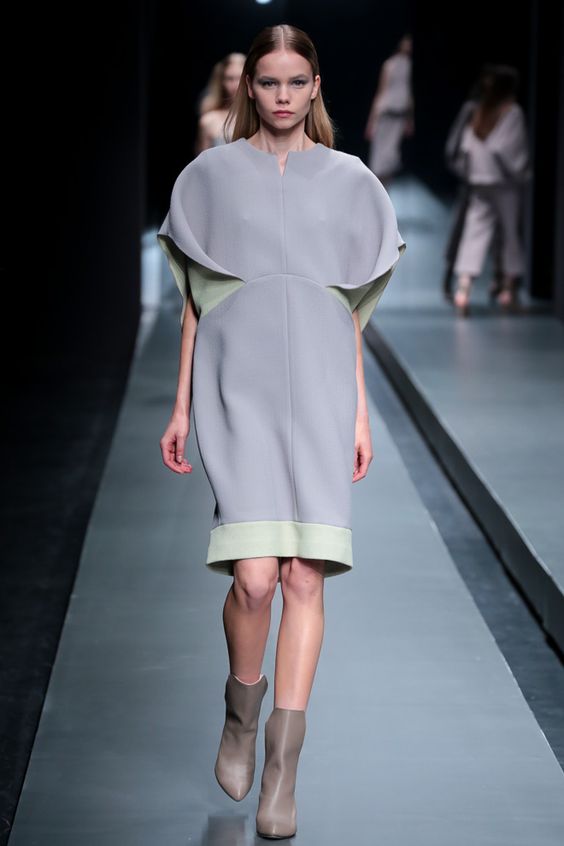
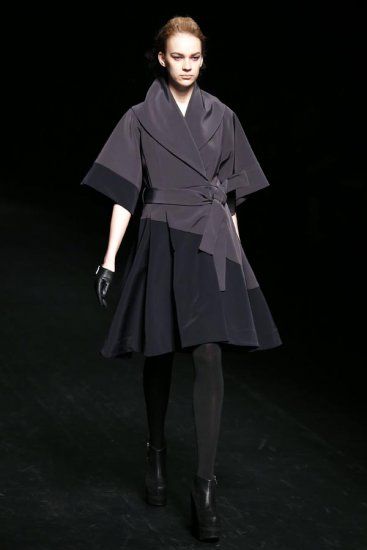
I've included some key contemporary Japanese Couture which I think is relevant - check them out!
In order -

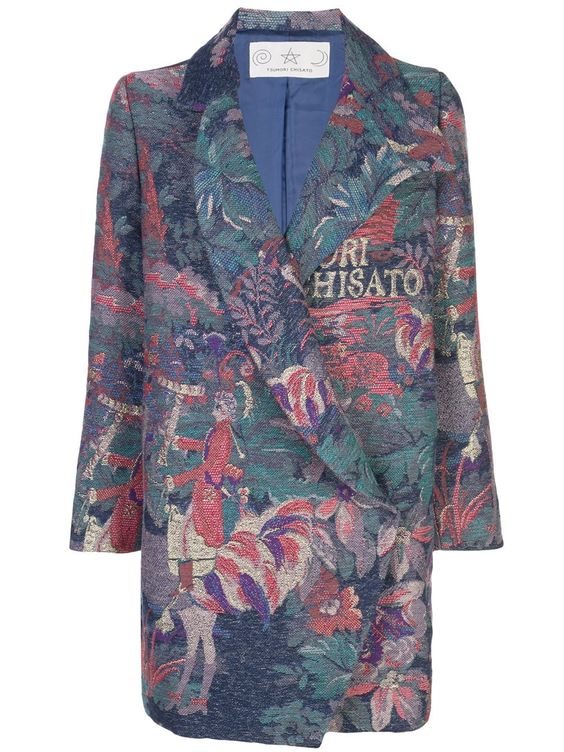



Embroidered Coat:
Tsumori Chisato
Samurai'esque Grey suit Yoshio Kubo 2020 collection
Grey/Lime dress & Mauve Coat Hanae Mori by Yu Amatsu